
Mindfulness vs. Meditation: We’re Leaf Peepin’ This Season
Living in Chicago can feel busy. Whether you are working, studying, or parenting, we could all use mindfulness. Mindfulness can help you practice the small, repeatable skill of being present, a skill that, over time, can reduce stress and anxiety, improve emotional regulation and nervous system regulation. Mindfulness can reduce anxious and depressive loops, improve sleep, focus, and reduce physical symptoms associated with anxiety. With mindfulness, we can both physically and emotionally be grounded in the present, treat ourselves with more compassion, and in turn, others as well, improving our relationship with ourselves, others, and the world around us.
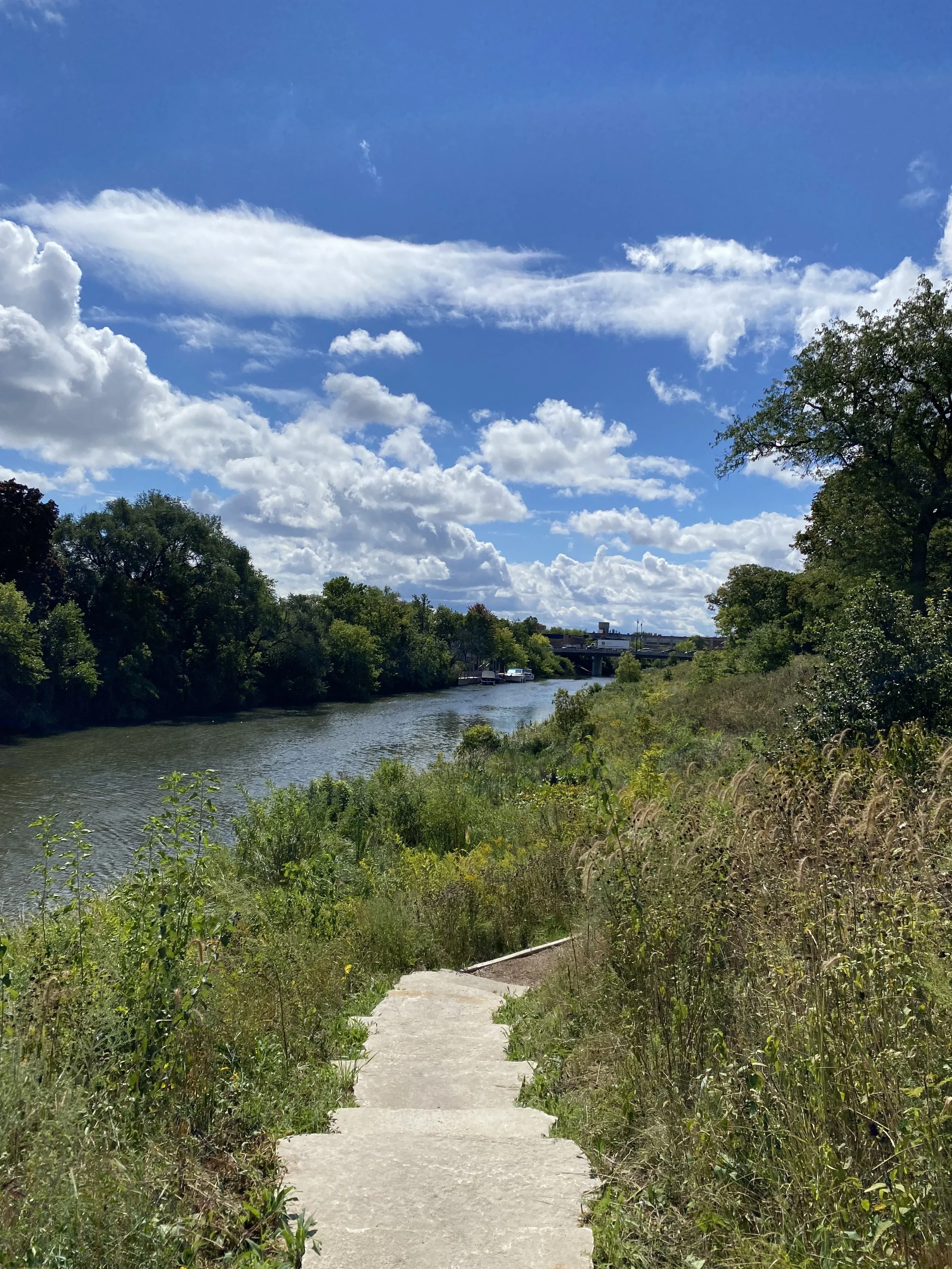
Have I already told you how much I love the river path by our Avondale therapy office?
Leaves are crunching. Trader Joe’s cinnamon brooms are flying off of shelves. It’s officially Autumn. You know what that means. A blog about mindfulness and nature walks!
People often use "mindfulness" and "meditation" interchangeably, but they're not quite synonymous. Both are invaluable practices that have been used for centuries and adapted into therapy in different ways, including interoceptive awareness. Mindfulness develops awareness and presence, while meditation draws from mindfulness to train the brain and focus. This simple blog post won’t quite dive into the entire lengthy history of each, but I’ll try to describe a bit about each, how they can be beneficial, and how they may be practiced in and out of therapy. According to Jon Kabat-Zinn, the founder of Mindfulness Based Stress Reduction (MBSR), mindfulness is, “a form of meditation that really is the cultivation of intimacy with awareness.”
Meditation is typically a formal practice, like training. It's something you set aside time for: sitting quietly, focusing on your breath, or following a guided practice. Meditation is an umbrella term that can include loving-kindess meditation or visualization. When I think of meditation, I think of the brain sifting through the clutter and honing in on a focal point or intention. When I think of mindfulness, I think of noticing what’s floating through the brain, and allowing the thoughts to continue floating by.
Mindfulness is noticing without judgment - paying attention to what's happening right now, in your mind and body and surroundings, without immediately labeling it as good or bad, right or wrong. You can practice mindfulness anywhere. You can be mindful while washing dishes, eating dinner, or having your morning coffee.
Why Our Therapists Teach Mindfulness
In our therapy practice here in Chicago, we teach mindfulness as a practical, everyday tool. Many of the struggles that bring people into therapy - anxiety, rumination, self-criticism, the desire to get rid of ‘bad’ emotions - are made heavier by our own judgment. We don't just feel anxious; we judge ourselves for feeling anxious. We don't just have a difficult thought; we spiral into what that thought means about us.
Mindfulness interrupts that cycle. When a client learns to notice a thought or feeling without immediately judging it, they create a small gap and a choice - space to respond thoughtfully and intentionally instead of automatically. This is why mindfulness shows up across so many approaches we draw on in session, from cognitive behavioral techniques to acceptance-based work: it's less about achieving a calm state and more about changing your relationship to what is currently happening in your brain and body in relation to the world around you.
If you're working with us, you'll likely hear us come back to this phrase often: notice without judgment. The more we practice it together in session, the more it will come up for you naturally outside of sessions. Eventually, it will loop through your brain as easily as a BTS song. Which is a good thing, depending.
Practicing Mindfulness This Fall
Autumn is my favorite time to practice mindfulness (perhaps because that’s when it is easiest for me?) As we begin to slow down, prepare for transitions, we see natural cycles unfolding around us. We see impermanence, acceptance, and patterns. Instead of resisting the change, struggling with the future, I encourage you to notice. Without judgment.
● Notice the leaves changing, without narrating a story about it. Instead of "WINTER IS COMING," try just seeing the color - the specific gold or rust of a single leaf - without assigning anything else.
● Use your walk as a mindfulness practice. As you walk through the neighborhood or a park (may I recommend the path by the river just north of our Avondale office location?), notice the leaves crunching, the change in air temperature, the smell of the season.
● Let the season model impermanence. Trees don't resist losing their leaves. Mindfulness often includes a similar practice: letting thoughts and feelings arrive and pass without clutching onto them. If I have a thought about climate change, I’m letting that thought float down the river as best I can.
● Pair it with something you already do. You don't need a new ritual. We often treat intentionality as a weird productivity buzzword. But you can be intentional each day to turn a ritual you already have (brushing your teeth, walking to work, opening the curtains) into a moment of mindfulness.
…Why?
It's to practice the small, repeatable skill of being present, a skill that, over time, can reduce stress and anxiety, improve emotional regulation and nervous system regulation. Mindfulness can reduce anxious and depressive loops, improve sleep, focus, and reduce physical symptoms associated with anxiety. With mindfulness, we can both physically and emotionally be grounded in the present, treat ourselves with more compassion, and in turn, others as well, improving our relationship with ourselves, others, and the world around us.
If you’d like to learn more about how we integrate mindfulness into our sessions in Chicago, or more about therapy in general, please fill out an intake form!